How to Keep Your Home Cool: A Practical Guide to Beating the Heat
December 10, 2025
The battle against rising summer temperatures requires a layered strategy, moving from quick fixes to major structural upgrades. Effective cooling is about more than just air conditioning; it involves controlling solar gain, maximizing natural ventilation, and optimizing your building’s envelope.
Here is an actionable guide based on energy efficiency principles.
Immediate Actions (Low Cost, High Impact)
These simple steps maximize existing resources and are highly cost-effective:
- Outdoor Shading: Prioritize external shading solutions such as awnings, brise-soleil, external shutters, or Venetian blinds. These are far more effective than indoor shades because they stop solar heat before it enters the glass.
- Solar-Control Films: Apply solar-control films directly onto south–southwest–southeast facing glazing. This significantly lowers solar gain and avoids excessive glare inside the home.
- Targeted Night-Time Ventilation: Implement a precise ventilation strategy. Open opposite windows during the cooler evening and night hours to create a powerful cross-breeze (night free-cooling). Crucially, keep windows sealed and shaded during the day.
- Sealing: Use weather-stripping to seal gaps around window frames and shutter boxes. Hot air and humidity can sneak in through these small openings, undermining cooling efforts.
- Dehumidification: In humid climates, focusing on lowering relative humidity often provides a significant boost to comfort without requiring the air conditioning unit to overcool the space.
Building Envelope Improvements (Medium Investment)
These are structural changes that yield permanent energy savings and improved comfort.
- Solar-Control Glazing: Upgrade to double or triple glazing featuring a low g-value (Solar Heat Gain Coefficient, SHGC) combined with a low-E coating. Ensure the frames are thermally broken to prevent heat transfer through the material itself.
- Roof/Attic Insulation (Top Priority): This is often the most critical upgrade. Use high-quality materials like mineral wool, polyurethane, or blown-in insulation. Consider adopting a cool roof or ventilated roof design, especially under lightweight materials.
- External Wall Insulation: Applying insulation to the exterior walls reduces peak thermal loads. Where feasible, use light-coloured, reflective finishes to minimize heat absorption.
- Radiant Barriers: Install radiant barriers below light roof structures (like tiles or metal sheets) to effectively cut down radiant heat transfer into the attic space.
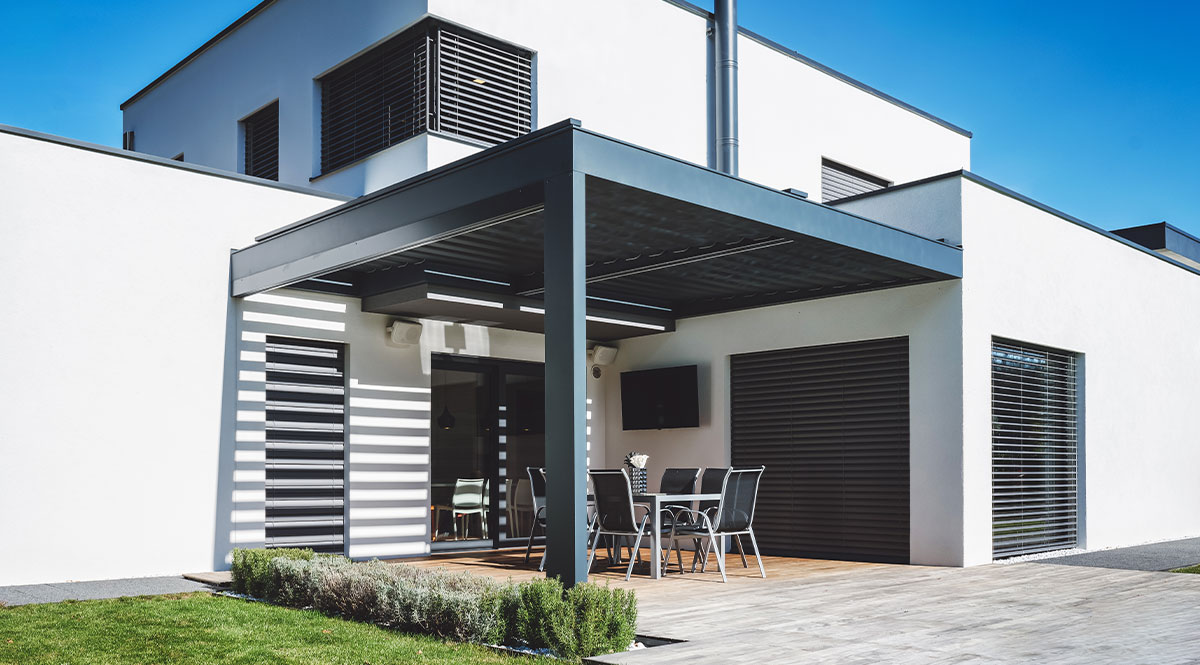
- Architectural Shading: Incorporate fixed architectural elements such as balconies, overhangs, and pergolas with adjustable screens to permanently shade walls and windows.
Advanced Solutions (Renovations)
These solutions require deeper renovation planning and integrate mechanical and material strategies.
- Adjustable External Louvres: Install sophisticated adjustable external louvres and brise-soleil directly integrated into the facade system for dynamic solar control.
- Mechanical Ventilation: Implement mechanical ventilation with heat recovery (MVHR), coupled with night free-cooling, where the external climate allows. This ensures air quality while pre-cooling the intake air.
- Thermal Mass: Utilize thermal mass indoors (e.g., thicker plasters, exposed masonry, or concrete) to dampen daily temperature peaks by absorbing heat during the day and releasing it slowly at night.
- Green Roof: Installing a green roof improves thermal time lag and provides excellent summer comfort through natural cooling and insulation.
HVAC & Fans: Smart Use
- High-Efficiency AC: Ensure your high-efficiency air-conditioning unit is sized correctly. Set moderate, realistic setpoints (ideally 24–26 °C) and actively control humidity rather than drastically dropping the temperature.
- Ceiling Fans: Using ceiling fans effectively creates an air speed of about $+1$ m/s, which provides a perceived cooling effect of approximately $-2$ °C while using minimal power.
Quick Priorities Checklist
- Shade south–SW–SE glazing externally.
- Upgrade glazing (solar control + low-E) and ensure all frames are properly sealed.
- Insulate the roof (attic) first, before tackling the walls.
- Consider external insulation and use light, reflective colours outside.
- Ventilation Strategy: Ventilate heavily at night; keep closed and shaded during the day (in hot climates).
Common Mistakes to Avoid
- Relying only on indoor blinds: By the time heat reaches interior blinds, the heat has already entered the thermal envelope, becoming trapped inside.
- Choosing dark glass without checking solar factor: Dark glass may reduce glare but could still have a poor solar factor, leading to an interior that is both dim and insufficiently solar-controlled.
- Overcooling with the AC: Setting the AC excessively low (below 24°C) drastically increases energy consumption and raises the risk of condensation and moisture issues.